Nature's Remedy
London’s parks are some of its oldest spaces – and yet they’ve never been more relevant. We look at why these mood-boosting, stress-busting corners are so important and the groups that are making them as inclusive and accessible as possible.
The allure of a city is its hustle and bustle – the galleries, the hum of a heaving, sprawling transport network shuffling inhabitants from A to B to C, the buzzing restaurant scenes and the thrill of live performances at theatre and music venues, not to mention the hedonistic nightlife offerings. So, what’s its appeal when the bright lights are temporarily dimmed? Last year, as London’s residents were forced to slow down, many of us developed an unexpected, new-found nature appreciation, tuning in to the gentler, more ‘softly spoken’ offerings of the city around us as we trudged around parks and green spaces. An exciting, diverse host of groups and organisations sprang up and mobilised to help encourage even the most reluctant urbanites to get outside and take up everything from birdwatching to grow-your-own. And, now that the capital and our packed-out schedules are returning to normal, that ability to step out into the great outdoors – even if that simply means a postage-stamp-sized garden or your local recreation ground – to breathe and reconnect is going to be more crucial than ever.


For any naysayers reading who might sniff at the thought of London boasting anything more natural than the organic produce found in Whole Foods, it’s actually pretty green as cities go. Paris, for instance, only has 9.5% parkland; London boasts a sizeable 33% (and let’s not forget the commons, heaths, greens and more). And while one in seven of us live here without access to a balcony, communal or private garden, 44% of Londoners live within a five-minute walk to green space. Our parks are hardworking, too – Clapham Common, for instance, serves around 46,000 people as their nearest park. But access to green space isn’t always guaranteed, or equally shared. If you are an inner-city Londoner lucky enough to have a garden, chances are this green space will be less than 70m² (for comparison, the national average garden size is 332m²). There are some staggering disparities as to who has access to gardens, too; according to an ONS report released last year, 10% of white people have no outdoor space, but that percentage almost quadruples for black people.
With data like this, it makes the mission of the growing crop of outdoor groups doing their best to improve and encourage diversity and accessibility in our green spaces even more important. Groups like Flock Together, the grassroots birdwatching club conceived by friends Ollie Olanipekun and Nadeem Perera during the pandemic, and which describes itself as a ‘#BIRDGANG support club’ who ‘combat the underrepresentation of Black, Brown and POC in nature.’ Their monthly walks, organised in London parks and nearby forests, not only give their followers a chance to get out a pair of binoculars amongst other nature appreciators, but the opportunity to expand networks and make new connections, too.
“Flock together, the grassroots birdwatching club conceived by friends Ollie Olanipekun and Nadeem Perera during the pandemic, gives its followers the opportunity to pick up their binoculars and make new connections, too.”
Older institutions have also recognised a need for increased diversity among its nature-loving members. The Ramblers Association, for instance, founded in 1935, is on a mission to recruit youngsters and get teens active and motivated outdoors amongst nature. This young age group has not only become increasingly sedentary due to lockdown school closures, but 80% of them report the pandemic has worsened their mental health, with increased feelings of anxiety, isolation, and a loss of coping mechanisms and motivation. The effects of a reconnection to nature could not come at a more important time.
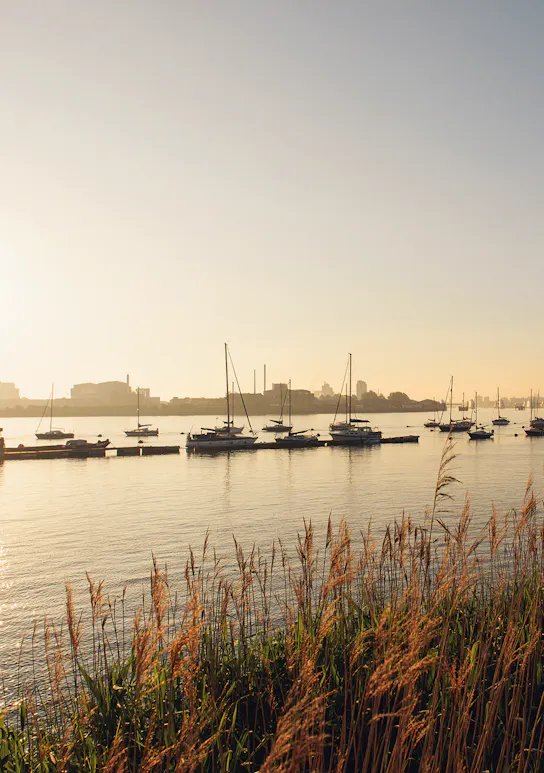
Urban Growth, meanwhile, is busy trying to “improve Londoners’ wellbeing by collaborating with them to create and maintain beautiful, biodiverse spaces.” In practice this means teaching city-dwelling adults and children gardening skills and how to grow their own food, encouraging ‘green thinking’ no matter how small the space, as well as creating and maintaining innovative green spaces in the capital. With an army of volunteers behind it, the social enterprise has a well-honed knack for transforming previously underused and unloved spaces into incredible and much-loved oases, as well as conjuring gardens and vegetable patches in unexpected corners – it was Urban Growth, for example, who helped to set up the Jetty, the Peninsula’s Thames-facing community garden.
Excitingly, after months of solitary walks, we’ve all been able to get back to enjoying green spaces collectively again. “During the pandemic, parks demonstrated that they are multi-purpose spaces,” affirms Dr Audrey Tang. “There’s a stereotype that an interest in nature or going to the park is something for older people. But we’ve seen dating in parks, exercise classes that were previously in gyms brought out to the park; they’re areas of play, which is a concept just as important to adults as children. If we see our green spaces as community hubs, they help multiple generations with mental health because nature teaches us all patience while things grow; it teaches us nurturing, it teaches us respect and it teaches a sense of community. These are soft health drivers. Nature has a way of surviving anything, growing and being resilient, which we can learn from. If we stop trying to control everything and we can learn to observe, watch and be, that helps us flourish. Nature helps us flourish.